I was eighteen when we met. I had just finished school, and my mind was filled with thoughts of studies, travels, and freedom. He was a year older and already seemed calmer than everyone around.
After the accident, he had been in a wheelchair since he was sixteen. He didn’t talk about it on the first night. He simply said that it was like this, and he was used to it.
We started messaging. At first, about movies, music, plans. I liked that he never complained and never asked for pity.
When he told me more about the accident, I listened without fear. Maybe because I was too young to feel it. I thought love would solve everything.
A year later, we were a couple. My friends quietly asked if I really understood what this meant. I said yes.
In 2010, we attended a joint event. We took a photo. Everyone called it a brave photo. To me, it simply looked like ours.
The first years were easy. We studied, rented a small apartment, laughed at small things. I helped him physically, he supported me emotionally.
Everything changed when we started working. My days became long, his — monotonous. He spent more time at home.
I became tired. Not of him — of the responsibility. But back then, I didn’t know how to separate that.
There were moments when I got angry over small things. Because everything had to be planned. Because we couldn’t just leave spontaneously.
Once, he said: “If you want to leave, I’ll understand.” I got angry. Not because he was wrong, but because he thought about it.
We didn’t get married right away. We waited. Maybe not because of the circumstances, but because of fear.
The years passed. My parents stopped asking. Friends got used to it. It became our life.
The biggest turning point came after ten years. Not because of the illness, not because of a conflict. But because of my exhaustion.
One evening I said that I couldn’t go on. That I was tired of always being strong. He listened quietly.
That evening, for the first time in all those years, he said: “I was afraid you would say that.”
We started attending counseling. Not because we wanted to separate, but because we wanted to stay together.
I learned to ask for help. He learned not only to be grateful, but also to express his needs.
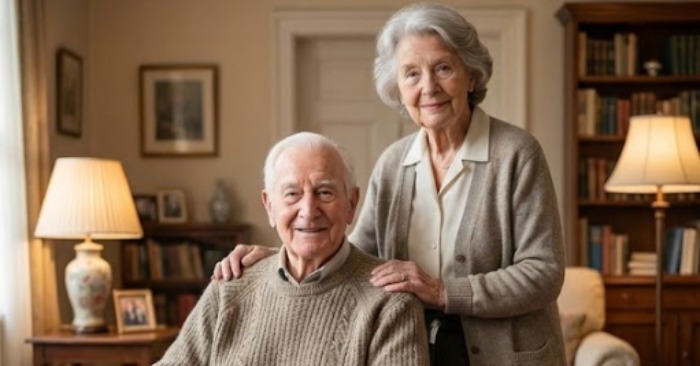
In 2026, we took a photo again. He — in the same wheelchair. I — no longer a girl, but a woman.
The only difference was this: I no longer sacrificed myself in silence. And he no longer apologized for his existence.
Now, people ask if I ever regretted it. I answer honestly — there were days when it was hard.
But I never regretted learning that love is not a promise to endure everything. It’s a decision to be honest, even when it’s uncomfortable.
Do you believe that true partnership starts not with sacrifice, but with boundaries?