We had been together for many years, and even in the toughest situations, I always recognized him by his gaze. But this time, something was off from the very first second.
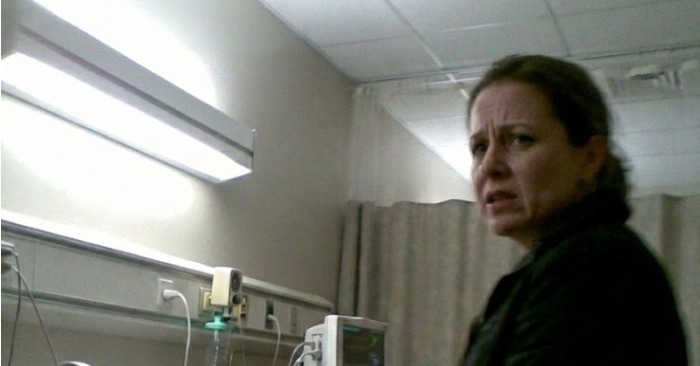
He was lying in bed, connected to machines. The face was the same, but the eyes were unfamiliar. He looked at me as if seeing someone for the first time.
I greeted him. Quietly, carefully. He didn’t answer.
I thought he was tired or still not fully awake from the medication. I approached him and touched his hand. His body reacted, but not as I expected.
He slowly turned his head toward me. His gaze was empty, without any emotion. In that moment, I felt a chill run down my back.
I asked if he recognized me. My voice trembled, but I tried not to show it. The room was silent, only the sounds of the machines were heard.
He was silent for a while. It seemed like he was searching for words, but not their meaning. I waited, holding my breath.
Then he uttered one word. Not my name. Not a question. Not an apology.
He said: “Who are you?”
I stood by the bed and felt my legs weaken. It felt as if the floor beneath me was disappearing. That one word destroyed everything I had taken for granted.
The doctors had warned me about possible disruptions. They said the trauma could affect his memory. I nodded, but inside, I didn’t believe it could be this way.
I thought he would at least remember me. That I would be the exception. That love would somehow protect us from what had happened in his mind.
In the following days, everything repeated. He didn’t remember our home, our history, even our wedding. I became a stranger to him, someone who came every day and sat too long by his bed.
I told him about us. About our trips, our laughter, our arguments, and little things. He listened politely, but without feeling.
Sometimes he would smile, but it wasn’t a smile meant for me. It was a reaction to the story, not the person. I felt this very clearly.
When I went home, I would cry. Not loudly, not dramatically. Quietly, like people cry who are afraid to admit that they’ve lost something irretrievably.
I started living between two realities. In one, he was my husband, with whom I had spent half of my life. In the other, he was a stranger who didn’t even know why I was so important to him.
Rehabilitation lasted for months. His body grew stronger, but his memory didn’t return as everyone had hoped. The doctors said it would take time. Sometimes a lot of time.
I was there. Every day. Not because anyone told me to. But because I couldn’t leave.
But one day, he said something I wasn’t expecting. He asked why I was still here. Why I cared for him as if we were family.
I told him the truth. That he was my husband. That we loved each other. That I was waiting for him to remember me.
He was silent for a long time. That evening, he took my hand for the first time. Not from memory, but from choice.
He said he didn’t remember our past. But he felt safe with me. That it meant something to him.
And then I understood that our story had changed. It would no longer be what it was. But that didn’t mean it was over.
Today, I am still by his side. He still doesn’t remember many things. But he chooses me every day anew.
Sometimes love isn’t memories. Sometimes it’s a decision to stay, even when everything starts again.
If you have ever faced the reality that a loved one became a stranger, share your thoughts in the comments. Sometimes, hearing others helps us understand that we are not alone.