I left to study thinking my mom was safe with her new husband. After the divorce, she had been alone for a long time, and it hurt me to leave her in an empty house. When she told me she had met a colleague and was planning to get married, I felt relief.
He seemed calm and orderly. Always polite, always quiet. I thought this was exactly the kind of person she needed.
When I left for university, I felt at ease. My mom had company, shared breakfasts, and someone to turn off the lights in the evening, not alone. I kept telling myself that I had done the right thing.
In the first year, she called often. She asked about my studies, my friends, life in the dorm. I didn’t ask too many questions because I could hear her voice, and that was enough for me.
Everything changed imperceptibly. The calls became shorter, and the messages less frequent. When I asked if everything was okay, she always answered that she was just tired.
The first time I worried was when she didn’t come to my birthday. She said she wasn’t feeling well, but her voice was empty. I didn’t want to press her.
A few months later, I decided to return unexpectedly. I wanted to surprise her and calm myself. I thought maybe I was overreacting.
When I opened the door, I felt a strange silence. The house was clean, but somehow lifeless. Mom greeted me with a smile that didn’t reach her eyes.
She was thinner. Her shoulders always seemed tense. She said everything was fine, but her hands were shaking.
I noticed her leg. It was bandaged, like after an injury. She quickly explained that she had slipped and changed the subject.
In the evening, her husband came home from work. He greeted me politely but didn’t even look her in the eye. I felt a strange coldness.
During dinner, he spoke only about himself. Mom remained silent and just nodded. When I tried to include her in the conversation, he interrupted her.
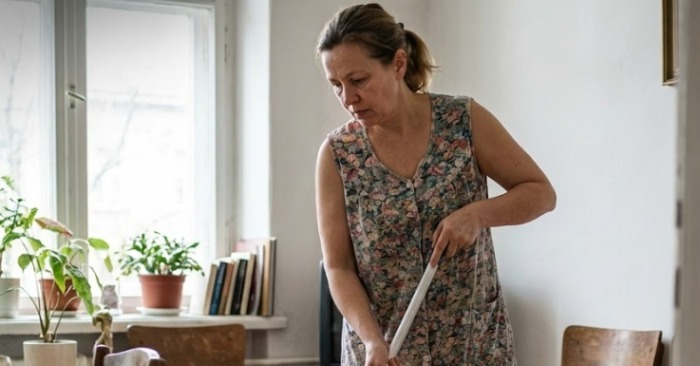
After dinner, she started cleaning the house. With her bandaged leg, she was washing the floors when she could have sat down. I offered to help, but she just shook her head.
In that moment, I realized something was wrong. Not loudly, not openly, but deeply. And that feeling didn’t leave me.
The next morning, I woke up earlier. Mom was already in the kitchen, preparing breakfast. She moved quietly, as if afraid to make noise.
I asked her about her leg. She said there was no need to dramatize. Her voice had more fear than pain.
When her husband left for work, I closed the door and told her I wanted the truth. She was silent for a long time. Then she sat down.
She said that after the wedding, everything changed. At first, there were remarks, then demands. Later — complete indifference.
She said he didn’t like “weak people.” That illness or injury was just an excuse to him. That she had to manage on her own.
I asked why she hadn’t told me. She said she didn’t want to disturb me. That I had my own life.
In that moment, I felt guilty. I left thinking she was safe. But in reality, I had left her alone in the fight.
I offered for her to move in with me. She was scared. She said she was afraid to start over. She had gotten used to fear.
In the evening, when he came home, I watched them from the side. His voice was calm, but full of control. Mom’s eyes constantly followed his mood.
That night, I couldn’t sleep. I realized that my peace had been built on her silence. And that it had to end.
The next day, I told him directly that mom was leaving. He laughed and said she wasn’t going anywhere. Then mom stood up.
She said she was leaving. Her voice trembled, but she didn’t lower her gaze. I saw how much he didn’t like it.
We packed our things that same day. She cried, but not from fear. From relief.
Now, mom lives with me. She still fears noise and sudden movements. But she laughs again.
I often think about that day when I left to study. About how easily I believed the pretty picture.
If you’re reading this and see silence in your family, don’t wait for it to become the norm. Share your thoughts in the comments, because sometimes it’s a stranger’s voice that helps break the silence.