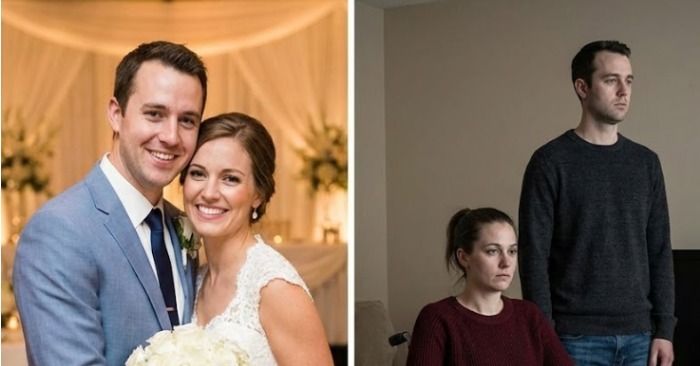
After the car accident that left me unable to walk, I thought the hardest part would be learning to live in a body that no longer obeyed me. I was wrong. The real blow came later – when I realized how my husband truly measures love and how much he thought my care was worth.
I am 35, and until everything changed, I was the one holding our marriage together.
I paid most of the bills. I managed the household. I cooked, cleaned, planned, and made sure our life ran smoothly. When my husband wanted to change jobs, take breaks, or “figure things out,” I adapted. I worked extra hours, restructured our budget, and made sure we made it. I never complained because I believed that’s what partners do.
We had been together for ten years. I truly believed that marriage meant being there for each other, especially when life got hard.
Then the accident happened.
I don’t remember the accident itself. One moment I was driving through an intersection, and the next I woke up in the hospital, staring at the ceiling, overwhelmed with pain and confusion. I survived, but my legs were badly injured. The doctors spoke frankly but with hope. With time, therapy, and constant care, there was a chance I could walk again. However, for several months, I needed help with almost everything – getting out of bed, washing, moving around the house.
Losing my independence crushed me. I had always been strong, independent, capable. Yet, I kept telling myself that we could overcome this together. Love should grow stronger in moments like these. At least that’s what I believed.
Coming home in a wheelchair, I constantly repeated one thought in my head: we will get through this together.
BUT ALMOST IMMEDIATELY, SOMETHING FELT WRONG.
But almost immediately, something felt wrong.
My husband became distant. Irritable. Easily frustrated. I thought he was just tired. Anyone could feel like that, I tried to convince myself. I tried to be patient.
Then one evening, he sat on the edge of the bed and said that we needed to “be realistic.”
He explained that taking care of me was too difficult for him. That it interfered with his work, his plans, his freedom. That this wasn’t what he had signed up for.
And then he said something I will never forget.
If I wanted him to stay and help me, I would have to pay him.
A fixed weekly amount.
At first, I laughed, waiting for him to say he was joking. He didn’t. He compared himself to a professional caregiver. He talked about the time, the effort, the inconvenience. He turned my recovery into a business deal.
I WAS CRUSHED. HUMILIATED.
I was crushed. Humiliated. Furious.
But I was also trapped.
I couldn’t move independently, and my family lived far away. I had no quick escape. So, against all my instincts, I agreed.
Every week, I transferred money from my savings. In return, I got rushed help, impatience, and long hours of solitude. He sighed when I needed help. He considered my needs an inconvenience. Many days, he disappeared for hours without explanation.
I noticed that he was always guarding his phone. Always texting. Always turning the screen away from me.
Then one morning, while he was in the shower, his phone lit up on the nightstand.
The message said it all.
He was having an affair – with someone I trusted. And the money I was paying him for my care was being used to fund their time together.
I DIDN’T CONFRONT HIM RIGHT AWAY.
I didn’t confront him right away. I realized that anger wouldn’t be enough. I needed evidence and a plan.
I called my sister and told her everything. She came immediately. Together, we gathered evidence and contacted a lawyer. At that time, I continued pretending everything was normal. I kept up the weekly transfers. I stayed calm.
When everything was ready, I handed my husband the final envelope.
Inside were the divorce papers – and all the evidence.
He tried to justify himself. He said he deserved more. That I was ungrateful. That I didn’t understand how much he had “sacrificed.”
I looked at him and felt nothing.
I told him the truth: love doesn’t have accounts. Marriage is not a transaction. And care, given only when it’s convenient, is not love.
That was the last money he got from me.
MY SISTER STAYED AND TOOK CARE OF ME WITH PATIENCE, KINDNESS, AND NO EXPECTATIONS.
My sister stayed and took care of me with patience, kindness, and no expectations. Gradually, I started to heal – both physically and emotionally.
From this experience, I learned one thing I will never forget.
True love doesn’t count.
True love doesn’t require reward.
And true love doesn’t disappear when life gets hard.
If someone stays only when it’s easy or convenient for them, they were never there for love – only for comfort.
And I deserved more.