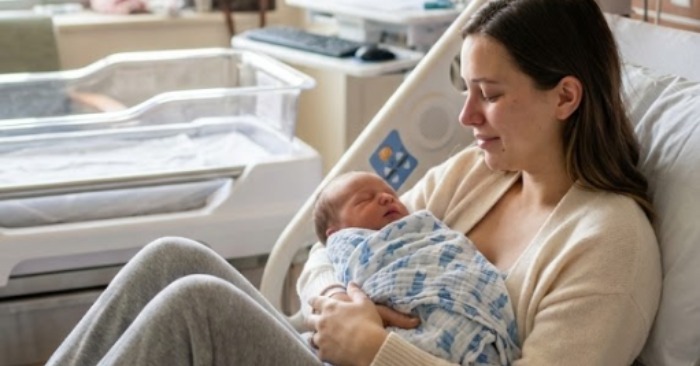
I was 26 when I became a mother, and until then, I thought I knew everything about my life. I grew up with just my mom in a small town, without a father, without grandparents’ stories, and without family secrets. My world had always been simple and clear — or at least, that’s what I thought.
My mom raised me alone from the moment I was born. She never spoke about my father, and over time, I stopped asking. She worked two jobs, came home tired, but always found the strength to ask how I was doing in school.
When I got pregnant, she was the first person I told. I feared her reaction, but she hugged me and said we would get through it together. She attended all the visits, helped collect baby things, and was there every day.
On the day I gave birth, she arrived at the hospital before I did. She spoke with the doctors, carried documents, and seemed incredibly calm. When my daughter was born, my mom cried in a way I had never seen before.
The first night, she refused to go home. She sat next to me and kept repeating that she wanted to make sure we were both okay. At the time, it seemed like maternal love, but now I realize it was something more.
The next day, I noticed my mom behaving unusually. She stared at my daughter for too long, as if trying to memorize every feature. Sometimes she would touch her face and quickly pull her hand away.
When the nurse brought documents for me to sign, my mom suddenly felt unwell and left. The nurse asked if everything was alright, but I didn’t have an answer.
In the evening, my mom asked about the name. When I told her I wanted to name my daughter Elze, she went silent. After a few moments, she said it was a beautiful name, but her voice betrayed something unspoken.
That night, I barely slept. My daughter breathed peacefully, and I thought about all the small signs in my mom’s behavior that suddenly connected into one troubling image.
The next morning, my mom came early. She looked exhausted, as if she hadn’t slept all night. She said we needed to talk, but not here. She said the hospital wasn’t the right place for such conversations.
In the afternoon, she returned with an envelope in her hand. She sat beside my bed and was silent for a long time. Finally, she said that 26 years ago, she also held a baby in a hospital room. But that baby wasn’t me.
She said that when she was 22, she unexpectedly got pregnant. At that time, she had neither money, nor support, nor the ability to raise me. She made the decision to give me up for adoption.
Two years later, she married. She and her husband tried to have children but couldn’t. Eventually, they adopted a girl — me. She never told me the truth because she was afraid of losing me.
She said she had planned to tell me when I was older, but the years passed, and she kept putting it off. When she saw me with my daughter, she realized she could no longer stay silent.
In the envelope were documents. A copy of my birth certificate. My real biological mother’s name — her own name, only a different last name. She was my mother twice — once as my biological mother, and once as my adoptive mother.
I was silent for a long time. Not out of anger, but out of shock. All my life’s memories suddenly took on a new meaning. She never abandoned me. She chose me twice.
I asked why she told me now. She replied that she didn’t want me to ever feel deceived. She wanted my daughter to grow up in a family without secrets.
We cried together. My daughter slept, unaware that her life had already begun with a truth that took me 26 years to learn.
Today, I still call her mom. Maybe even more than before. She wasn’t perfect, but she was brave. And I know that my daughter will grow up knowing that sometimes love means the hardest decisions.
Do you think parents should always reveal the truth to their children, even if it’s painful?